The flow state is characterized by complete absorption in a task, loss of self-consciousness, and distorted sense of time. During flow, individuals experience heightened focus, effortless action, and a sense of control over their performance. This optimal state of consciousness offers numerous benefits, including:
Increased productivity and efficiency
Enhanced creativity and problem-solving abilities
Improved learning and skill development
Greater enjoyment and intrinsic motivation
Reduced stress and anxiety
Boosted self-esteem and sense of accomplishment
Experiencing flow regularly can lead to greater overall life satisfaction and psychological well-being. The state is often described as deeply rewarding and can occur across various activities, from artistic pursuits to professional tasks, as long as the challenge level matches one’s skills.
Flow and creativity
Flow significantly enhances creativity by providing an optimal mental state for innovative thinking. During flow, the brain’s prefrontal cortex, responsible for self-consciousness and inner criticism, becomes less active, allowing for more spontaneous and original ideas to emerge. This state of reduced self-awareness and heightened focus creates an ideal environment for divergent thinking, a key component of creativity.
Additionally, the deep engagement characteristic of flow often leads to novel connections between ideas and improved problem-solving abilities, further boosting creative output.
Strategies to achieve flow
To achieve flow, one should focus on tasks that balance challenge and skill level, set clear goals, and seek immediate feedback. Creating an environment free from distractions is crucial, as is eliminating external interruptions and internal self-criticism. Regular practice of flow-inducing activities strengthens neural pathways, making it easier to enter the state over time. Adequate sleep, proper nutrition, and physical exercise also support the ability to achieve flow by enhancing overall cognitive function and energy levels. Additionally, breaking complex tasks into smaller, manageable steps can help maintain motivation and engagement, facilitating the flow experience.
Flow vs. Meditation
While both flow and meditation involve heightened focus and present-moment awareness, they differ in key aspects. Flow is characterized by deep engagement in a specific activity, often leading to a loss of self-awareness, while meditation aims to cultivate non-judgmental awareness of thoughts and sensations. Meditation can support achieving flow states by enhancing concentration and reducing stress, which are conducive to flow experiences. However, flow typically involves active engagement in challenging tasks, whereas meditation is often practiced in stillness. Both states can contribute to improved cognitive function and well-being, with meditation potentially serving as a tool to facilitate more frequent flow experiences in daily activities.
Several tips
To acquire the ability to enter the flow state anywhere and anytime you want, and to use it to the fullest extent, it is worth focusing on several aspects. First, the tasks you want to “dive into” should be on the edge of your abilities to avoid boredom or frustration. If they are too easy, they lead to boredom, and if too difficult, to stress and frustration. It is important to set clear and achievable goals within which your tasks in the flow state are embedded. This certainly helps maintain concentration and motivation.
Minimize distractions such as noise, phone notifications, or other factors that can disrupt your concentration. Remember, too, that frequent practice of flow helps maintain the skills of concentration and engagement. The more often you experience flow, the easier it is to achieve it in the future.
Identify the times of day when you are most creative and focused, and plan the most difficult tasks for those moments. Regular breaks help maintain a high level of energy and concentration. Other forms of practicing mindfulness, such as meditation, can improve your ability to concentrate and facilitate achieving the flow state.
Choose tasks that are interesting and satisfying for you. The higher the level of skill, the greater the chance of achieving flow. Develop your skills to be able to take on increasingly demanding tasks.
Analyzing and reflecting on flow experiences can help you understand what is necessary to achieve this state in the future. Recall situations in which you experienced flow, and describe these experiences in detail. By consciously applying these strategies, you can increase the frequency of experiencing the flow state, which leads to better quality thinking, increased creativity, and efficiency in problem-solving.
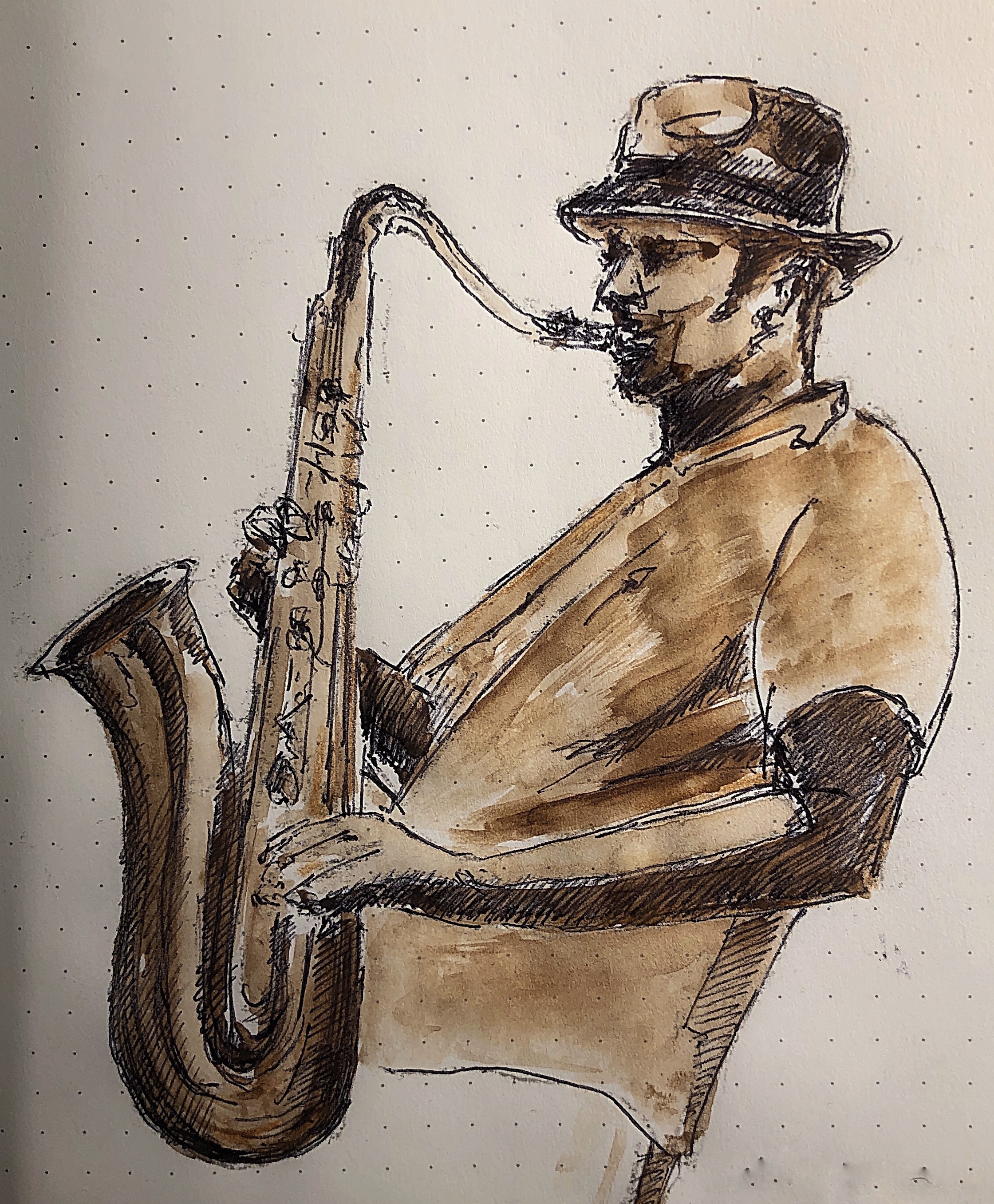
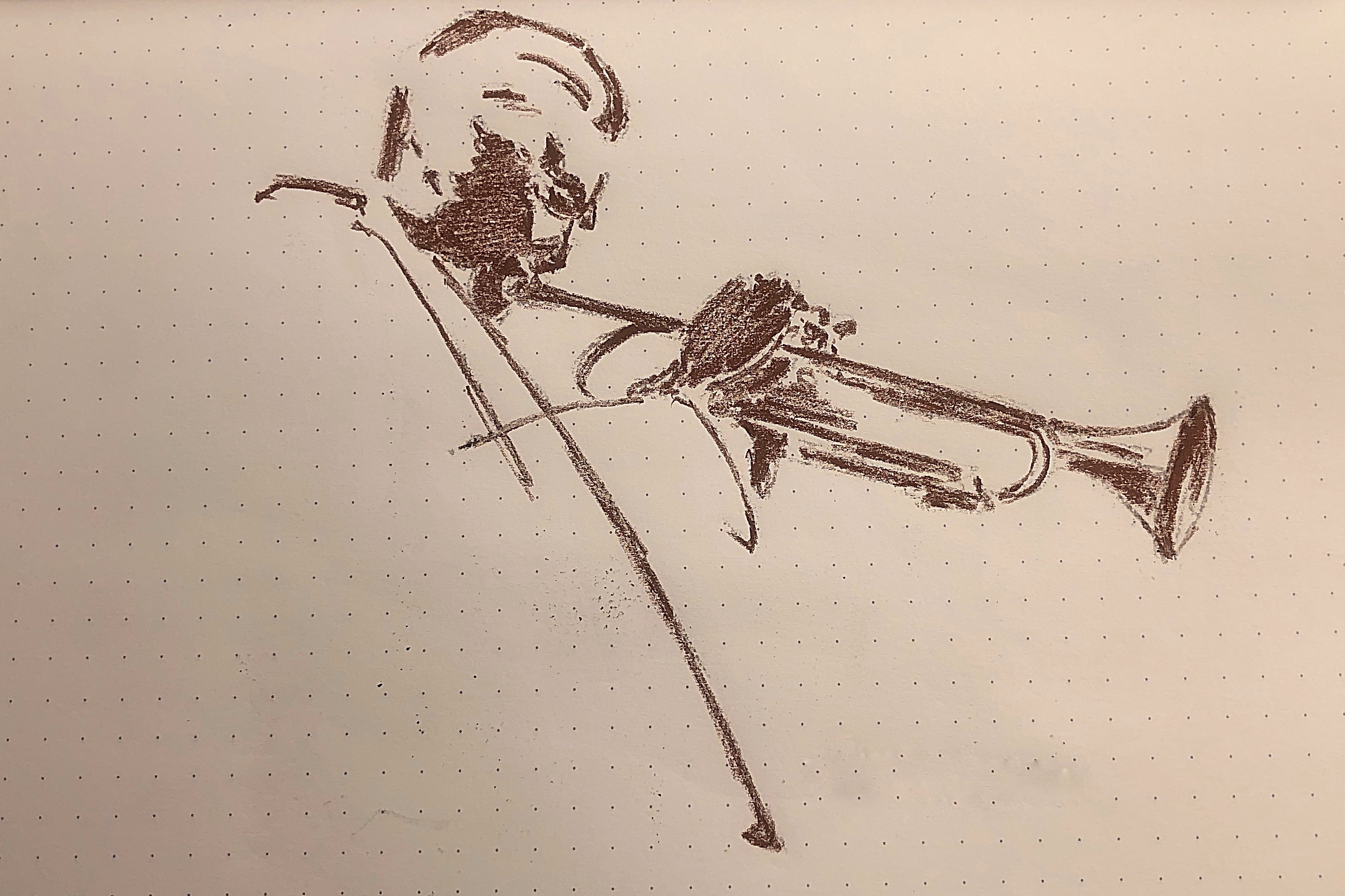
In the dynamic world of creative individuals, seeking new sources of inspiration and methods of work is imperative for further developing creativity. One such source can be a jazz jam session—a spontaneous gathering of musicians that embodies the essence of improvisation and collaboration. A jam session is not only a musical event but also a unique experience that, I am convinced, can be transferred to other fields requiring a creative approach, such as writing, design, or visual arts. A jam session is characterized by the absence of rigid rules and structures, allowing participants to freely explore sounds and rhythms. This spontaneity and openness to experimentation form the basis for developing new ideas and solutions. Furthermore, in this context, a jam session can be seen as a metaphor for any creative process where improvisation and collaboration play a fundamental role. In this article, I will explore how the principles and experiences from a jam session can be applied to other creative fields. We will look together at the conditions that favor the transfer of these experiences and the obstacles that may arise and hinder or prevent it. I will also discuss how lateral thinking techniques can support creativity in everyday situations. The goal is to show that an approach based on jam sessions can enrich the creative process, leading to more innovative and original results. We invite you to discover how the spirit of a jam session can inspire and transform creative approaches in various areas of life.
2. Key Elements of a Jam Session
A jam session is a unique event that brings musicians together in a spontaneous and creative act of making music. Although its roots lie in jazz, the principles and dynamics of a jam session can be successfully applied to other creative fields. In this chapter, we will examine the basic elements of a jam session that can inspire writers, designers, visual artists, and other creative professionals.
Improvisation and Spontaneity
Improvisation is the heart of a jam session. Musicians interact without a pre-prepared plan, allowing for the free exploration of new melodies and rhythms. This spontaneity is absolutely crucial for discovering unexpected solutions and ideas. In other creative fields, such as writing or design, improvisation can take the form of free writing, quick sketching, or experimenting with different styles and techniques. This allows for breaking routines and opening up to new possibilities.
Collaboration and Exchange of Ideas
A jam session is also an excellent example of collaboration. Musicians listen to each other, respond to one another, and together create something unique. This collaboration is based on mutual trust and openness to others’ ideas. In the context of other creative fields, collaboration can take the form of teamwork, where diverse perspectives and skills are combined to achieve more innovative results. Organizing brainstorming sessions or collaborative design are just some of the methods that can support this process.
Openness to New Experiences
Musicians participating in a jam session are open to experimenting with new sounds and styles. This openness to new experiences is a breeding ground for creativity. In other fields, this can be achieved by exploring new techniques, tools, or topics. Variability and diversity of stimuli can stimulate creativity and lead to the discovery of new areas of creativity.In summary, the key elements of a jam session—improvisation, collaboration, and openness—form the foundations that can be successfully applied in various creative fields. Embracing these principles can help develop a more flexible and innovative approach to creativity, opening up new possibilities and inspirations.
3. Practical Application in Other Fields
Transferring experiences and principles from jam sessions to other creative fields, such as writing, design, or visual arts, can significantly enrich the creative process. In this chapter, we will consider how the most important elements of jam sessions can be practically applied in various areas of creativity.
Writing
Improvisation in writing can take the form of free writing, where authors allow themselves to freely jot down thoughts without prior planning or censorship. This technique helps to break creative blocks and discover new ideas. Collaboration in writing can include joint writing sessions where authors share their texts and inspire each other. Openness to new experiences can be developed by experimenting with different literary styles or narrative forms.
Design
In design, improvisation can manifest through quick sketching and prototyping, allowing for rapid testing and development of ideas. Collaboration plays an important role in the design process, where diverse teams can combine their skills and perspectives to create more innovative solutions. Organizing design workshops or brainstorming sessions fosters the exchange of ideas and joint creation. Openness to new experiences in design can be developed by exploring new technologies, materials, or trends.
Visual Arts
In visual arts, improvisation can involve spontaneous creation, where artists allow themselves to freely experiment with colors, forms, and techniques. Collaboration in art can include joint art projects or exhibitions, where artists inspire each other and combine their visions. Openness to new experiences can be developed by participating in various workshops, artistic travels, or experimenting with new media.In summary, the practical application of jam session principles in various creative fields requires openness to experimentation and collaboration. Embracing an approach based on improvisation, collaboration, and openness can lead to a more dynamic and innovative creative process. Regardless of the field, it is important to create a space free from censorship, comparisons, and judgments, where creativity can flourish, and new ideas can be discovered and developed.
4. Conditions Conducive to Creativity
As mentioned earlier, to effectively transfer experiences from jam sessions to other creative fields, it is necessary to create the right conditions that foster creativity. In this chapter, we will examine the elements of the environment and approach that can support creative thinking and the obstacles that may arise.
Openness and Flexibility
Openness to new ideas and flexibility in the approach to work are preliminary conditions for the development of creativity. It is worth encouraging experimentation and risk-taking, which can lead to the discovery of innovative solutions. In practice, this means creating an environment where every idea is welcome, and mistakes are seen as a natural part of the creative process, serving as a springboard for more creative ideas.
Teamwork and Brainstorming
Collaboration with others is one of the foundations of a jam session, which can be successfully applied in other fields. Teamwork allows for the combination of different perspectives and skills, often leading to more creative and effective solutions. Organizing regular brainstorming sessions, where participants can freely share ideas, fosters the exchange of inspiration and the generation of new ideas.
Variability and Diversity of Stimuli
Creativity often thrives in an environment full of diverse stimuli. Variability in surroundings, participation in various cultural events, or exploration of new fields can stimulate creative thinking. It is worth encouraging the search for inspiration from different sources, which can lead to the discovery of new ideas and perspectives.
5. Obstacles in Transferring Experiences
Transferring experiences from jam sessions to other creative fields can be extremely beneficial, but it also involves certain challenges and obstacles. In this chapter, we will discuss the most common barriers that can hinder this process and ways to overcome them.
Fear of Evaluation and Criticism
One of the main obstacles in the creative process is the fear of evaluation and criticism. In jam sessions, musicians often act without fear of mistakes, allowing for the free exploration of ideas. In other creative fields, it is important to create an atmosphere where participants feel safe sharing their ideas. This can be achieved by establishing rules that in the early stages of the creative process, ideas are not judged but only explored.
Routine and Monotony
Creativity can be suppressed by routine and monotony. Constant repetition of the same activities and lack of new stimuli can lead to creative stagnation. To prevent this, it is worth regularly introducing changes in the work environment, participating in new experiences, or exploring various sources of inspiration. Variability and diversity can stimulate creativity and lead to the discovery of new ideas.
Lack of Openness and Flexibility
Another obstacle may be a lack of openness to new ideas and a lack of flexibility in the approach to work. In jam sessions, participants are open to experimentation and ready to change direction during creation. In other fields, it is worth adopting a similar approach, encouraging experimentation and risk-taking. Flexibility in thinking and action can lead to more innovative solutions.
Insufficient Collaboration
Collaboration is a necessary condition of a jam session, and its absence can be an obstacle in other creative fields. Working in isolation can limit the diversity of ideas and perspectives. It is worth organizing brainstorming sessions, workshops, or other forms of collaboration that allow for the exchange of ideas and inspiration. A team approach to creativity can lead to more creative and effective solutions.
In summary, transferring experiences from jam sessions to other creative fields requires overcoming several obstacles, such as fear of evaluation, routine, lack of flexibility, and collaboration. Creating an environment conducive to openness, experimentation, and collaboration can help develop creativity and discover new creative possibilities. Embracing these principles can lead to a more dynamic and innovative creative process.
6. Lateral Thinking as a Support for Creativity
Lateral thinking, the ability to view problems from different perspectives and seek unconventional solutions, is a key tool supporting creativity. In this chapter, we will discuss how lateral thinking techniques can be applied in everyday situations requiring creativity and how they can support the creative process inspired by jam sessions.
Lateral Thinking Techniques
Reframing the Problem
One of the fundamental ways to apply lateral thinking is to reframe the problem we are trying to solve. Instead of focusing on obvious solutions, it is worth asking whether the problem can be defined differently. You might try to decompose it, thus discovering that its essence lies elsewhere than originally assumed. This can lead to the discovery of new possibilities and approaches.
Thinking by Analogy
Searching for analogies between different problems can help find new solutions. Comparing current challenges to those already solved in other contexts can inspire innovative ideas. You can look at the problem through the eyes of someone “from another industry.” Why not try to view an IT problem, for example, through the eyes of a plumber?
Using Random Stimuli
Introducing random elements into the thinking process can stimulate creativity. For example, choosing a random word from a book and trying to relate it to the problem you are trying to solve can lead to unexpected associations and ideas.
Mind Mapping
Creating mind maps is a popular technique that helps organize and visualize ideas. It allows for the exploration of different directions of thinking and can lead to the discovery of new connections and solutions.
Trial and Error
Experimentation and shedding the fear of making mistakes are fundamental to creative exploration. Mistakes should be seen as a natural part of the creative process, something that—like a springboard—can lead to the discovery of innovative solutions.
Application of Lateral Thinking in Practice
Lateral thinking can be applied in various creative fields, such as writing, design, or visual arts. For example, in writing, you can experiment with different narrative forms, and in design, with unusual materials or techniques. In visual arts, lateral thinking can lead to creating works that combine different styles and media. In conclusion, lateral thinking is a powerful tool supporting creativity and innovation. Applying lateral thinking techniques in everyday creative situations can lead to a more dynamic and effective creative process. Embracing an approach inspired by jam sessions, combined with lateral thinking, can open up new possibilities and lead to the discovery of unexpected solutions.
Encouragement to Experiment
I encourage you to experiment with the presented techniques and principles to discover new possibilities and develop your creativity. Regardless of the field in which you operate, the spirit of a jam session can inspire the search for new paths and the discovery of unknown areas of creativity. Introducing elements of jam sessions into other creative fields is not only a way to enrich the creative process but also to develop skills in collaboration and openness to new experiences. I hope that the ideas and techniques presented in this article will be helpful in your creative journey, leading to the discovery of new inspiring paths.

 Myśli zapisane